To begin, we kindly ask that you share some initial details about your project. This allows us to assess whether our company is the right fit for your needs. Once reviewed, a member of our team will be in touch within five business days to discuss the next steps.
The Home Reset: A Thoughtful checklist before you build, renovate, or extend.
A “Home Reset” Matters before any building project.
January often brings clarity. Not necessarily answers, but questions.
For many Melbourne homeowners, this is the time when subtle thoughts start to surface: Does our home still work for how we live? Are we adapting to the house, or is the house supporting us? If we were to change something, where would we even start?
Before plans, quotes, or conversations with builders, there’s value in stepping back and resetting how you see your home.
This checklist isn’t about finishes or trends. It’s about understanding what your home needs, and what you need from it.
01. Observe how you actually use your home
Forget how the house should be used. Focus on how it is used.
Over the course of a week, notice:
Which spaces feel calm and functional
Which areas feel cramped, noisy, or underutilised
Where clutter naturally accumulates
Pay attention to friction points:
Morning routines
Family gatherings
Working from home
Entertaining
These moments often reveal more than any floor plan.
02. Identify what feels temporary, and what feels permanent
Many homes evolve through temporary fixes:
Furniture rearranged to solve space issues
Storage added to compensate for layout limitations
Rooms doing double duty without intention
Ask yourself:
Which compromises feel acceptable?
Which ones are wearing thin?
This helps clarify whether you’re looking at a renovation, an extension, or a knockdown rebuild.
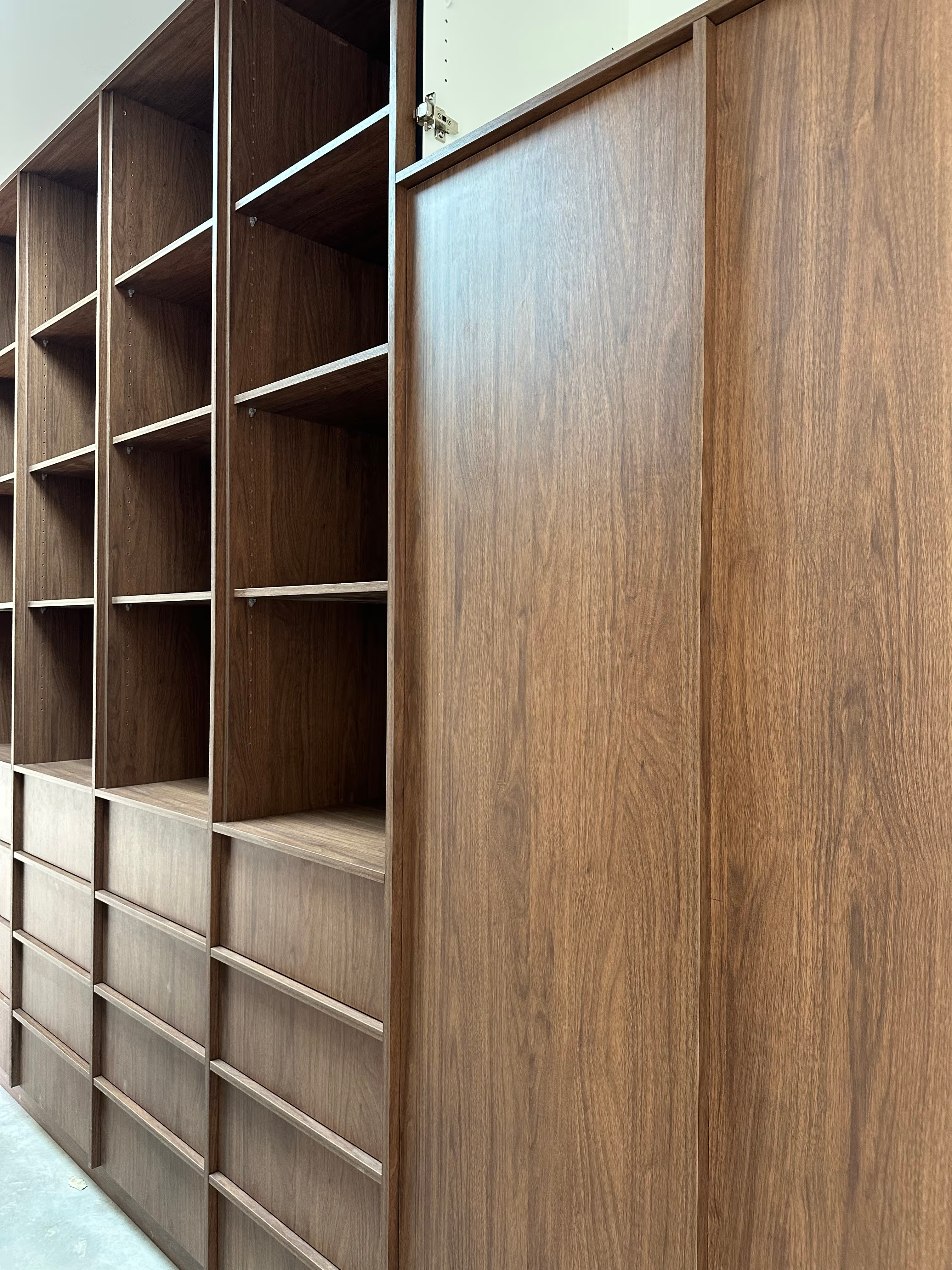
Reference: Joinery works for one of our projects currently under construction
03. Consider the next 10–15 years, not just now
Most considered building decisions aren’t about today, they’re about longevity.
Think about:
How your family might change
How you want the home to age
Whether accessibility, privacy, or flexibility will matter more over time
Homes that work well long-term are rarely reactive. They’re thoughtfully planned from the outset.
04. Walk your site with fresh eyes
If you own your block, step outside and look again:
Natural light throughout the day
Privacy from neighbours
How outdoor spaces connect to living areas
How the home sits in relation to the street
In established Melbourne suburbs, site conditions often drive the best outcomes, not trends.
05. Separate inspiration from intention
Saving images is easy. Understanding why you like them is what matters.
Instead of asking: Do I like this kitchen? Ask yourself: What feeling does this space create? Is it calm? Warm? Functional? Flexible?
The most successful projects aren’t copies, they’re responses to lifestyle, site, and priorities.
06. Start thinking about the process, not just the outcome
One of the biggest mistakes homeowners make is focusing only on the finished home.
The process matters just as much. Consider:
How involved you want to be
How much guidance you expect
How important communication and transparency are to you
A well-managed build should feel structured and clear, not overwhelming.
07. Have an early, no-pressure conversation
You don’t need answers yet. But speaking with the right builder early can help you:
Understand what’s realistic
Clarify the right path forward
Avoid costly missteps later
The best early conversations aren’t about quotes, they’re about listening and alignment.
A home reset isn’t about rushing into a project. It’s about clarity. Whether your next step is a renovation, an extension, or a knockdown rebuild, taking the time to reflect now often leads to better decisions later.
And better decisions lead to homes that feel right, not just on handover day, but for years to come.